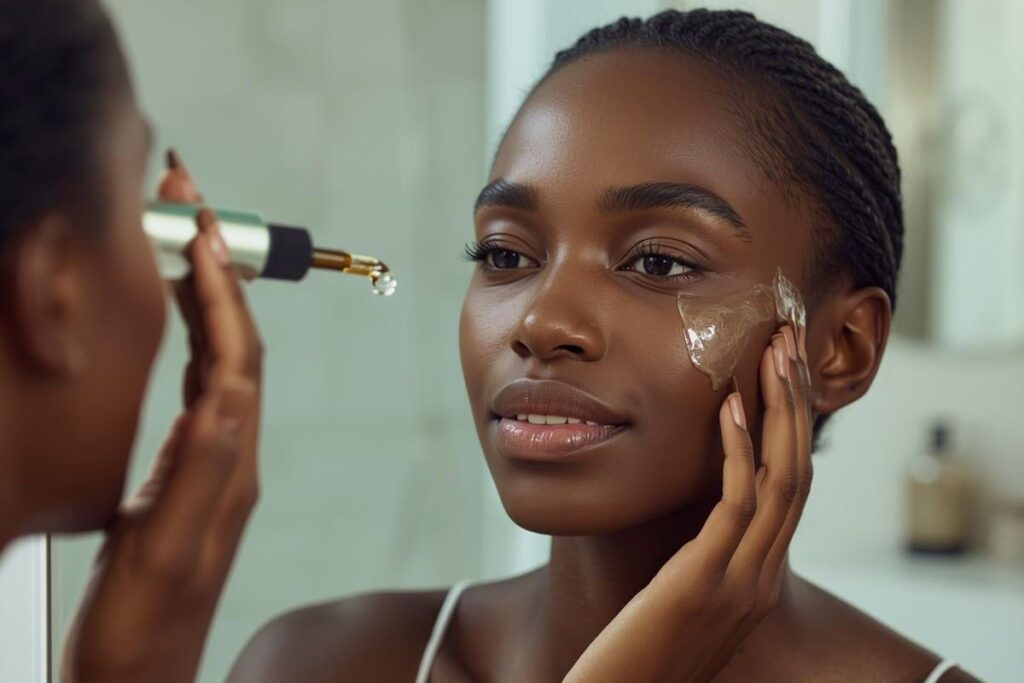
Hyperpigmentation on Black skin is extremely common, but the good news is that it’s also treatable with the right skincare routine and ingredients.
If you’re dealing with dark spots, uneven skin tone, acne marks, or discoloration, you’re not alone. Melanin-rich skin is more prone to hyperpigmentation because it naturally produces more pigment when the skin becomes irritated or inflamed.
The key to clearing hyperpigmentation is consistency, gentle skincare, and using ingredients that safely target dark spots without damaging your skin barrier.
In this guide, you’ll learn:
- What causes hyperpigmentation on Black skin
- The best ingredients for fading dark spots
- A dermatologist-recommended skincare routine
- Natural tips that help brighten melanin skin
- How to prevent hyperpigmentation from coming back
If your goal is clear, glowing, even-toned skin, this guide will walk you through everything you need to know.
This post may contain affiliate links. This means I will earn a commission if you purchase through my link, at no extra cost to you. Please read the full disclosure here.
What Is Hyperpigmentation?
Hyperpigmentation happens when the skin produces excess melanin, the pigment responsible for your skin color.
When your skin experiences inflammation or damage, it may create extra melanin in that area, leading to dark patches or spots.
This condition is especially common in melanin-rich skin, which is why many Black women struggle with stubborn dark marks that take longer to fade.
Common forms of hyperpigmentation include:
- Post-inflammatory hyperpigmentation (PIH) from acne or irritation
- Sun spots caused by UV exposure
- Melasma, often triggered by hormones
- Dark marks from cuts, burns, or insect bites
The good news is that with the right routine, these spots can fade significantly over time.
What Causes Hyperpigmentation on Black Skin?
Understanding the root cause of hyperpigmentation is the first step toward treating it.
1. Acne
Acne is one of the biggest causes of hyperpigmentation for Black women.
Even after a pimple heals, the inflammation can leave behind dark spots that last for weeks or months.
2. Sun Exposure
Many people believe darker skin doesn’t need sunscreen, but that’s a myth.
UV exposure stimulates melanin production, which can make dark spots darker and harder to fade.
3. Skin Irritation
Harsh skincare products, over-exfoliation, and picking at blemishes can cause irritation that leads to hyperpigmentation.
4. Hormonal Changes
Hormonal fluctuations during pregnancy or birth control use can trigger melasma, a form of hyperpigmentation that causes dark patches on the face.
Best Ingredients for Hyperpigmentation on Black Skin
The right ingredients can dramatically speed up the fading process.
Here are some of the most effective ones.
Vitamin C
Vitamin C is a powerful antioxidant that brightens skin and reduces dark spots.
Benefits include:
- Fading hyperpigmentation
- Boosting collagen
- Creating a radiant glow
It also helps protect skin from environmental damage that can worsen discoloration.
Niacinamide
Niacinamide is one of the best ingredients for evening out skin tone.
It helps:
- Reduce the appearance of dark spots
- Strengthen the skin barrier
- Control oil production
It’s also gentle enough for sensitive skin.
Alpha Hydroxy Acids (AHAs)
AHAs like glycolic acid and lactic acid gently exfoliate the skin, removing dead cells and encouraging new skin to surface.
This process helps fade discoloration faster.
Retinol
Retinol increases cell turnover, helping dark spots fade more quickly while improving skin texture.
If you’re new to retinol, start slowly to avoid irritation.
Licorice Root Extract
Licorice root naturally brightens skin and reduces excess melanin production, making it a great ingredient for treating hyperpigmentation on melanin skin.
Skincare Routine for Hyperpigmentation on Black Skin
Consistency is the secret to clearing dark spots.
Here’s a simple routine that works for most skin types.
Morning Routine
1. Gentle Cleanser
Start your day with a mild cleanser that removes oil and impurities without stripping your skin.
2. Vitamin C Serum
Apply a vitamin C serum to brighten skin and protect against environmental damage.
3. Moisturizer
Hydrated skin heals faster and maintains a healthy glow.
Look for moisturizers that contain hyaluronic acid or ceramides.
4. Sunscreen (Most Important Step)
Sunscreen is essential when treating hyperpigmentation.
Without SPF, dark spots can become darker and new ones may form.
Choose a broad-spectrum SPF 30 or higher.
Night Routine
1. Cleanser
Remove makeup, sunscreen, and daily buildup.
2. Treatment Serum
Apply targeted treatments like:
- Niacinamide
- Retinol
- AHA exfoliating serums
3. Moisturizer
Seal in hydration overnight so your skin can repair itself while you sleep.
Natural Ways to Reduce Hyperpigmentation
While skincare products are important, lifestyle habits also play a role in healthy skin.
Stay Hydrated
Drinking enough water helps maintain healthy skin and supports the body’s natural repair process.
Eat Skin-Healthy Foods
Foods rich in antioxidants can help promote brighter skin.
Examples include:
- Berries
- Leafy greens
- Sweet potatoes
- Avocados
Avoid Picking at Your Skin
Picking pimples or scratching insect bites can worsen hyperpigmentation.
Allow your skin to heal naturally whenever possible.
How Long Does Hyperpigmentation Take to Fade?
Hyperpigmentation doesn’t disappear overnight.
With consistent treatment, most dark spots begin fading within 4 to 12 weeks.
However, deeper discoloration may take several months to fully clear.
Patience and consistency are key.
How to Prevent Hyperpigmentation from Returning
Once your skin begins to clear, prevention becomes the priority.
Here are some simple ways to keep your complexion even and radiant.
- Wear sunscreen daily
- Avoid harsh skincare products
- Treat acne early
- Maintain a consistent skincare routine
- Keep your skin moisturized
These habits can make a huge difference in maintaining clear, glowing skin.
Final Thoughts
Hyperpigmentation on Black skin can feel frustrating, but it’s important to remember that your skin is capable of healing with the right care.
Focus on using gentle products, incorporating proven ingredients like vitamin C and niacinamide, and protecting your skin with sunscreen every day.
With patience and consistency, dark spots can fade and your natural glow will begin to shine through.
Your melanin-rich skin is beautiful, and with the right routine, it can look clear, radiant, and healthy every day.
Leave a Reply